fork函数和vfork函数
fork函数
在诸多应用中,创建多个进程是任务分解时行之有效的方法。例如,某一网络服务器进程可在侦听客户端请求的同时,为处理每---请求而创建一新的子进程,与此同时,服务器进程会继续侦听更多的客户端连接请求。以此类手法分解任务,通常会简化应用程序的设计,同时提高了系统的并发性。(即,可同时处理更多的任务或请求。)
1 #include <sys/types.h> 2 #include <unistd.h> 3 pid_t fork(void); //返回:子进程中为0,父进程中为子进程I D,出错为-1
执行调用后将存在两个进程,且每个进程都会从fork()的返回处继续执行。
这两个进程将执行相同的程序文本段,但却各自拥有不同的栈段、数据段以及堆段拷贝。子进程的栈、数据以及栈段开始时是对父进程内存相应各部分的完全复制。执行fork()之后,每个进程均可修改各自的栈数据、以及堆段中的变量,而并不影响另一进程。
注:现在很多的实现并不做一个父进程数据段和堆的完全拷贝,因为在fork之后经常跟随着exec。作为替代,使用了在写时复制( Copy-On-Write, COW)的技术。这些区域由父、子进程共享,而且内核将它们的存取许可权改变为只读的。(详见Linux|Unix系统编程手册)
程序代码则可通过fork()的返回值来区分父、子进程。在父进程中,fork()将 返回新创建子进程的进程ID。
当无法创建子进程时,fork()将返回-1。 失败的原因可能在于,进程数量要么超出了系统针对此真实用户(realuser ID)在进程数量.上所施加的限制(RLIMIT_ NPROC),要么是触及允许该系统创建的最大进程数这一系统级上限。
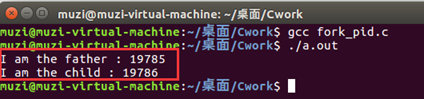
一般来说,在fork之后是父进程先执行还是子进程先执行是不确定的。这取决于内核所使用的调度算法。如果要求父、子进程之间相互同步,则要求某种形式的进程间通信。
例子:


1 #include<stdio.h> 2 #include<sys/types.h> 3 #include<unistd.h> 4 #include<sys/wait.h> 5 #include<stdlib.h> 6 #include<errno.h> 7 #include<string.h> 8 9 int main()10 {11 pid_t childPid;12 /* if((childPid=fork())==-1)13 {14 printf("Fork error %s\n",strerror(errno));15 exit(1);16 }17 else18 if(childPid==0)19 {20 printf("I am the child : %d\n",getpid());21 exit(0);22 }23 else24 {25 printf("I am the father : %d\n",getpid());26 exit(0);27 } */28 switch(childPid=fork()){29 case -1:30 printf("Fork error %s\n",strerror(errno));31 exit(1);32 case 0:33 printf("I am the child : %d\n",getpid());34 exit(0);35 default:36 printf("I am the father : %d\n",getpid());37 exit(0);38 39 }40 return 0;41 }View Code结果:
vfork函数
类似于fork(), vfork()可以为调用进程创建一个新的子进程。然而,vfork()是为子进程立即执行exec()的程序而专门设计的。
#include <sys/types.h> #include <unistd.h> pid_t vfork(void); //返回:子进程中为0,父进程中为子进程I D,出错为-1
vfork()与fork()一样都创建一个子进程, 但是它并不将父进程的地址空间完全复制到子进程中,因为子进程会立即调用 exec (或exit),于是也就不会存访该地址空间。不过在子进程调用 exec或exit之前,它在父进程的空间中运行。vfork()和fork()之间的另一个区别是:vfork()保证子进程先运行,在它调用exec或exit之后父进程才可能被调度运行。(如果在调用这两个函数之前子进程依赖于父进程的进一步动作,则会导致死锁。)
例子:
1 #include<stdio.h> 2 #include<sys/types.h> 3 #include<unistd.h> 4 #include<sys/wait.h> 5 #include<stdlib.h> 6 #include<errno.h> 7 #include<string.h> 8 9 int main()10 {11 pid_t childPid;12 if((childPid=vfork())==-1)13 {14 printf("Fork error %s\n",strerror(errno));15 exit(1);16 }17 else18 if(childPid==0) //子进程19 {20 sleep(1); //子进程睡眠一秒21 printf("I am the child : %d\n",getpid());22 exit(0);23 }24 else //父进程25 {26 printf("I am the father : %d\n",getpid());27 exit(0);28 }29 /* switch(childPid=vfork()){30 case -1:31 printf("Fork error %s\n",strerror(errno));32 exit(1);33 case 0: //子进程34 sleep(1); //子进程睡眠一秒35 printf("I am the child : %d\n",getpid());36 exit(0);37 default: //父进程38 printf("I am the father : %d\n",getpid());39 exit(0);40 41 } */42 return 0;43 }vfork_pid.c结果:
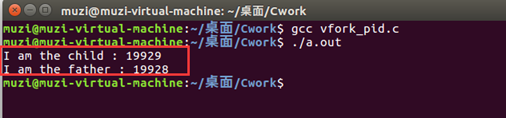
运行程序时可以看到,程序会停一秒然后分别打印出父子进程的ID.也就是说子进程进来就阻塞一秒,但也没有先去运行父进程,而是让子进程运行完了之后才运行父进程。
参考资料
Linux/Unix系统编程手册
Unix环境高级编程
Linux程序设计
No comments:
Post a Comment